Ballistics Calculator 2026
- 4.6
- Rating
- 100.00K
- Installs
- Free
- Price

 Analysis by App-foxy
Ballistics Calculator 2026 is the kind of sports app that makes sense only when you already have a practical reason to calculate a trajectory. I found it most useful as a compact reference for checking minute-of-angle adjustments and estimating bullet drop, rather than as a replacement for careful range work. Its main appeal is straightforward: it puts ballistic calculations on a phone, so I can work through a shooting setup without carrying a separate calculator or relying on mental arithmetic.
My overall view is positive but measured. The app has a clear purpose, a free entry point, and enough usefulness to explain its strong 4.6 average from around 13 thousand ratings. At the same time, a calculator is only as reliable as the information entered into it. That makes this a practical tool for preparation and comparison, not a magic answer that removes the need to confirm results in real conditions.
What the app does well in actual use
The central job is calculating ammunition drop and MOA, or minute of angle. In everyday terms, that means helping me understand how a projectile’s path changes over distance and how a sight adjustment relates to that change. The store summary describes it as a way to calculate ammo drop anywhere, and that focus is reflected in the experience: this is a specialized ballistic calculator, not a general sports tracker or a shooting game.
You May Also Like

 Blood Strike: 2.5 Anniversary
Blood Strike’s Loadouts Turn Every Drop Into a Tactical Gamble
A close look at Blood Strike’s custom loadouts: how fast access to signature weapons reshapes its battle royale rhythm, rewards preparation, and narrows the gap between fights.

 Pandora - Music & Podcasts
Pandora’s Music Is Easy to Start, but Harder to Recover
Pandora’s strength is its low-effort path from a seed to a station. Its weak spot is how much confidence it asks you to place in connection, setup, and quiet recovery.

 8 Ball Pool
 Is Built on Rivalries, Rematches, and Routine
A close look at the rivalries, rematches, shared routines, and unanswered safety questions that turn a quick pool match into a persistent mobile community.

 Samsung Music
’s Quiet Strength Is Playing What You Already Own
Its reach comes less from spectacle than from dependable access to a personal library. That simplicity is both the app’s strongest retention engine and its ceiling.

 AccuWeather: Weather Radar
AccuWeather Review: A Quick, Clear Forecast for Everyday Decisions
For everyday plans, the best forecast is the one you can understand quickly. AccuWeather makes rain timing, radar, and local conditions easy to act on, with a few trade-offs.

 Hill Climb Racing
Why Hill Climb Racing Still Turns Crashes Into One More Run
A tiny car, a bumpy hill and one more upgrade: Hill Climb Racing keeps resurfacing because its simple chaos makes every near-miss feel personal.
More From Our News Desk



I like that the idea is easy to understand before opening it. If I am preparing for a range session, comparing two loads, or checking whether a proposed sight correction makes sense, a dedicated calculator is more convenient than searching through unrelated tools. The app’s value comes from reducing the amount of manual calculation between a question and a usable estimate.
A realistic scenario would be preparing for a weekend range visit. I might know the ammunition I intend to use, the distance at which the rifle is zeroed, and the distance I want to test. Instead of writing several formulas in a notebook, I can use the app to organize the calculation, note the expected drop, and arrive with a clearer plan. That does not replace a confirmed zero, but it can prevent a session from beginning with guesswork.
The MOA side is especially useful for people who are still connecting ballistic figures with scope adjustments. A drop value by itself is not always intuitive. Converting that change into an angular adjustment gives the result more practical meaning, particularly when I am thinking about how many clicks or how much correction might be required on a sight that uses MOA markings.
The strongest feature is not complexity; it is having the relevant calculation in one focused place. A general calculator can handle arithmetic, but it does not naturally frame the problem around bullet drop and MOA. A paper chart can be quick, yet it may not match the exact setup I am checking. This app sits between those options: more purposeful than a generic calculator and more flexible than relying on a single printed table.
That flexibility is also where careful use matters. Ballistic results depend on the quality of the inputs and the assumptions behind them. A result that looks precise can still be a poor guide if the ammunition, zeroing distance, environmental conditions, or other setup details do not match reality. I therefore treat every output as an estimate to guide testing, not as proof that a rifle will behave identically outside the app.
A useful preparation tool rather than a substitute for range confirmation
I would use the app before shooting, during a planning break, or after collecting observations from the range. Beforehand, it can help me form expectations. Afterward, it can help me compare what I observed with what the calculation suggested. That second workflow is important because real-world results can reveal a mismatch between the assumed setup and the actual one.
For example, if my observed point of impact differs from the app’s estimate, I would not immediately blame the calculator. I would first check whether I entered the correct ammunition details and whether the sighting setup, distance, and conditions were represented accurately. This habit turns the app into a learning aid: it helps me see which assumptions matter instead of encouraging blind trust in a number.
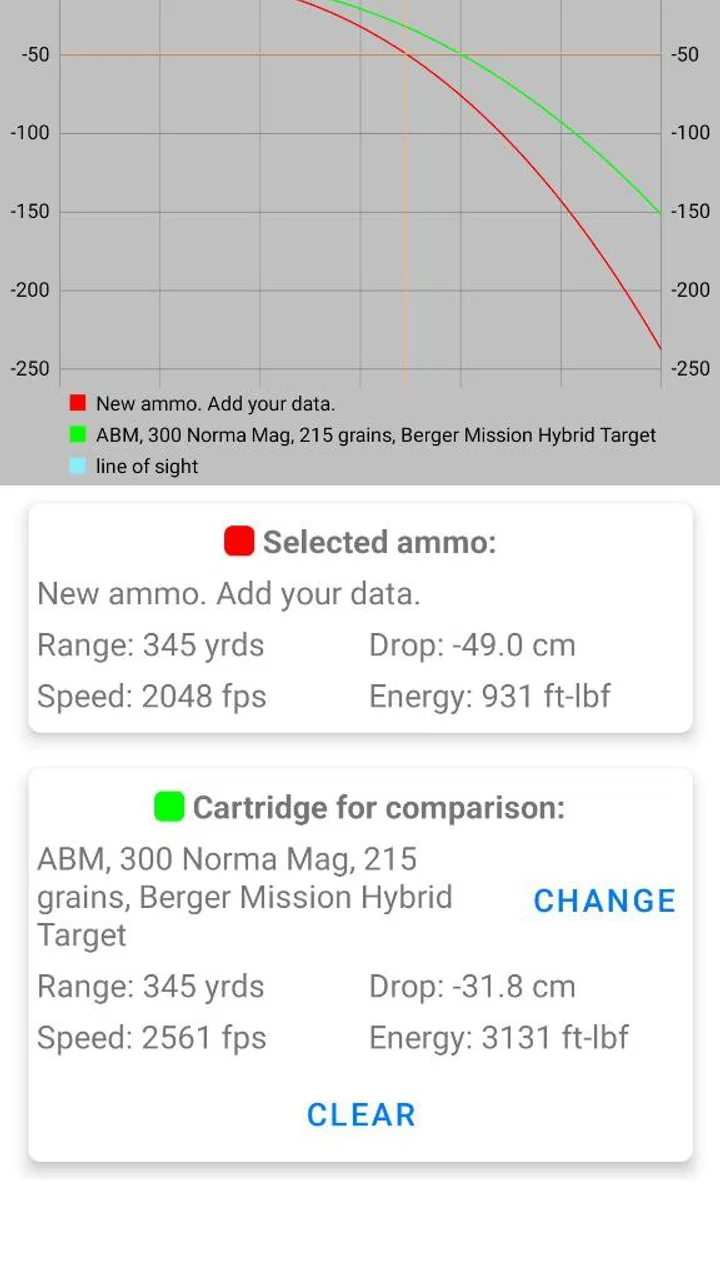
One non-obvious advantage is that it can make comparison more disciplined. If I am considering different ammunition choices, I can examine their expected trajectories using the same calculation process rather than switching between unrelated charts. The comparison is still only as good as the details available to me, but a consistent method is better than changing methods every time.
Another useful workflow is keeping the app open while making a written range plan. I can record the expected correction for each distance, then use those notes to structure testing. The benefit is not that the phone knows the answer automatically; it is that the calculation becomes part of a repeatable process. That is more valuable than using it once for a single number and forgetting how the number was produced.
There is also an educational benefit for newer shooters. MOA can feel abstract when explained only through scope markings. Seeing it connected to a specific drop calculation makes the relationship easier to understand. I would still recommend learning the underlying concept rather than memorizing app outputs, because understanding the calculation helps identify unreasonable results and input mistakes.
Where the experience becomes less comfortable
The main weakness is inherent to this type of app: it can present a clean answer to a messy physical problem. A phone screen may show a neat trajectory estimate, but the real result can be affected by details that are difficult to model perfectly. That creates a risk of false confidence, especially for someone who assumes the displayed figure is automatically accurate because it has several decimal places or a polished presentation.
I also think the app will feel narrow to people expecting a complete shooting companion. Its confirmed focus is ballistic calculation, particularly MOA and bullet drop. If I wanted broad equipment management, detailed range logs, extensive mapping, or a comprehensive training diary, I would look for a different kind of tool rather than expecting this calculator to cover every part of the hobby.
That limitation is not necessarily a flaw for the intended audience. A focused calculator can be preferable to a crowded application filled with features I never use. Still, buyers should understand the trade-off: specialization keeps the purpose clear, but it may leave advanced users wanting a fuller workflow around the calculation.
The free price makes trying it easy, although the app includes in-app purchases ranging from $14.99 to $59.99 per item. That is a meaningful consideration. I would install the free version first and decide whether the available experience fits my needs before spending anything. For a person who only occasionally checks a trajectory, a paid upgrade may not be worthwhile. For someone who uses ballistic calculations regularly, the decision depends on what additional value the purchase provides in practice.
Because the app is listed as free, it is approachable for curious beginners. However, “free to install” should not be confused with “every possible capability is included without cost.” I would advise checking the app’s purchase screen carefully and considering whether the calculator will become part of a regular preparation routine. The higher-priced option is difficult to justify for casual experimentation unless the user has a clear, recurring need.
Another point is phone dependence. A smartphone is convenient, but it introduces ordinary practical concerns: battery life, screen visibility, and the distraction of handling a phone in an environment where attention should remain on safe procedures. I see the app as something to consult during planning or at an appropriate pause, not something that should pull focus away from responsible range habits.
Who will get the most from it
I think this app is best suited to recreational shooters, students of external ballistics, and anyone who wants a dedicated way to explore MOA and bullet-drop calculations. It is also a reasonable choice for someone who has outgrown a basic printed chart but does not want a large, complicated ballistic suite.
It may be particularly helpful for a shooter who is learning how sight adjustments relate to distance. Instead of treating a correction as a mysterious number of clicks, the user can connect the correction to the angular measurement and the expected change in impact. That makes the tool useful for understanding, not only for producing an answer.
It can also suit experienced users who want a quick second check before a range session. I would not expect it to replace a trusted workflow built around confirmed data, but a fast calculation on a phone can still be convenient when I want to sanity-check a plan or compare scenarios.
On the other hand, I would skip it if my needs are extremely simple. If I always shoot at one distance with one established setup, a familiar dope card may be faster. I would also look elsewhere if I need a full-featured logbook, extensive environmental modeling, or a complete equipment-management system. A specialized calculator is not automatically the best choice merely because it has more options than doing arithmetic by hand.
Beginners should approach it with one important expectation: the app can help explain a calculation, but it cannot teach every part of safe and accurate shooting. New users still need to understand sight alignment, zeroing, measurement, and responsible range practice. The calculator becomes more useful as those basics become familiar, because then its results can be questioned intelligently instead of accepted without checking.
How it compares with the usual alternatives
The simplest alternative is a general calculator. That option is flexible and already available on most phones, but it leaves the user responsible for remembering the formulas and organizing every input. Ballistics Calculator 2026 is more convenient when the question is specifically about MOA or bullet drop because the app is built around that purpose.
Printed ballistic charts are another common choice. They are quick, readable, and do not depend on a phone. Their weakness is that they may represent a different load or setup from the one I am using. A dedicated app can be more adaptable for checking a particular situation, while a printed card remains attractive for speed and reliability once the setup has been confirmed.
At the other end are larger ballistic applications. Those may be better for users who need a broad set of variables, detailed records, or a more advanced planning environment. The trade-off is usually a steeper learning curve and more time spent entering information. This app makes more sense when I want a focused calculation without turning a simple check into a full data-management project.
That middle position is the clearest reason to choose it. It is more purpose-built than a normal calculator but less ambitious than a complete ballistic platform. Whether that feels like a strength or a weakness depends on the user. I appreciate the focus, but I would not recommend it as the only digital tool for someone whose needs go well beyond trajectory and MOA work.
Practical advice before relying on a result
My first tip is to treat inputs as part of the result. Before accepting a number, I would reread the ammunition and setup details and make sure the distance and zeroing assumptions match the situation I am preparing for. A calculation can be mathematically consistent while still being irrelevant to the actual rifle and load.
My second tip is to use the app for planning a test rather than predicting perfection. Write down the expected result, confirm the setup safely, and compare the observed point of impact with the estimate. That approach gives the app a useful role without allowing a screen-based number to override evidence from the range.
Third, I would compare scenarios one variable at a time. If I change ammunition, distance, and zeroing assumptions together, it becomes difficult to understand why the result changed. Keeping the comparison controlled makes the app more educational and helps expose which factor is driving the difference.
Finally, I would avoid paying for more than I genuinely need. The app is free to begin with, while individual in-app purchases sit between $14.99 and $59.99. For occasional use, the basic experience may be enough. Regular users can consider an upgrade only after identifying a specific limitation that the purchase would solve.
Compatibility, maturity, and everyday usability
The app is available for Android devices running version 7.0 or later, which covers a broad range of phones. Its current version is 1.999, and it was released on August 18, 2022. Those details suggest an established product rather than a brand-new experiment, although the more important question for me is whether the calculator fits my personal workflow.
It comes from Educational quizzes, a developer name that sounds broader than the app’s shooting-specific purpose. I would judge the product by how well it performs its stated calculation role rather than by the developer label. The app has passed the threshold of over one hundred thousand installs and carries an Everyone age rating, so it is positioned as broadly accessible rather than restricted to a narrow age group.
The rating and install count give me some confidence that the app has found a real audience, but neither figure removes the need to test it with my own setup. A high average can indicate that many people find it useful, while individual expectations still vary considerably. Someone wanting a quick calculator may be satisfied; someone seeking a complete ballistic workstation may not be.
My strongest criticism remains the possibility of overreliance. Any ballistic calculator can encourage users to focus on the displayed result instead of the quality of the assumptions behind it. I would rather see the app used as one step in a careful process: calculate, record, test, compare, and adjust responsibly. Used that way, its convenience is genuine.
My final recommendation
Ballistics Calculator 2026 is worth trying if your main need is a focused MOA and bullet-drop calculator. I found its appeal easy to understand: it turns a specialized calculation into a portable task and can make preparation more organized. It is especially sensible for recreational shooters and learners who want something more relevant than a generic calculator without committing immediately to a much larger ballistic application.
I would not recommend treating it as an authority that guarantees a real-world point of impact. Its usefulness depends on accurate inputs, sensible interpretation, and confirmation outside the phone. I would also think carefully before paying for an in-app purchase, particularly if I only need occasional estimates.
For me, the clear thesis is this: the app succeeds as a practical calculation aid, not as a complete shooting system. If that focused role matches what you need, the free starting point makes it easy to evaluate. If you need extensive records, advanced planning, or a chart you can consult without electronics, a different alternative may serve you better. Within its narrower purpose, though, it is a credible and convenient sports utility with enough substance to earn a place in a careful range-preparation routine.
FAQs for Ballistics Calculator 2026
01What is Ballistics Calculator 2026 used for?
Ballistics Calculator 2026 is designed to help shooters estimate projectile performance and trajectory before a range session. Depending on the selected firearm, ammunition, and environmental data, it can provide calculations such as bullet drop, velocity, energy, wind drift, and adjustments in MOA or MIL. It is a planning and reference tool, not a replacement for confirmed range data or professional instruction.
02What information do I need to enter for accurate results?
To obtain useful results, you generally need to enter details such as bullet weight, ballistic coefficient, muzzle velocity, sight height, zero distance, barrel or cartridge information, and the intended target range. Environmental inputs, including temperature, altitude, pressure, humidity, and wind speed or direction, can also affect the calculation. Inaccurate or estimated data will produce less reliable results.
03Can Ballistics Calculator 2026 be used for different firearms and ammunition?
The app is intended to support multiple firearm and ammunition configurations, allowing users to create or adjust profiles for different rifles, cartridges, bullets, and optics. However, available options and calculation methods may vary by version and device. Users should carefully verify that the selected bullet specifications, muzzle velocity, twist rate, and sight settings match their actual equipment.
04Does Ballistics Calculator 2026 work offline?
Many ballistic calculators can perform their core calculations without a continuous internet connection once installed, which is useful at outdoor ranges or in areas with weak reception. Nevertheless, certain features may require internet access, such as downloading updates, synchronizing saved profiles, viewing online documentation, or accessing external databases. It is best to test the app offline before relying on it during a trip.
05Are the results from Ballistics Calculator 2026 accurate enough for real-world shooting?
The app can provide valuable estimates, but its results depend entirely on the quality of the information entered and the limitations of the selected ballistic model. Real-world factors such as actual muzzle velocity, changing wind, ammunition variation, rifle condition, and range measurement can create differences. Always confirm calculations with safe, legal range testing and never treat the app as a substitute for judgment or training.
Pros
- Supports multiple ballistic inputs for more precise trajectory estimates.
- Useful for comparing different loads
- bullets
- and environmental conditions.
- Clear data presentation helps users understand shot corrections quickly.
- Can assist with long-range practice and pre-shooting preparation.
- Designed for shooters who need calculations beyond basic holdovers.
Cons
- Accurate results depend heavily on correctly entered firearm and ammunition data.
- Some advanced tools or features may require a paid upgrade.
- New users may need time to understand ballistic terminology and settings.
- Phone sensors and weather data may not always provide reliable readings.
- Results should be verified in real conditions before being used for shooting.

Ballistics Calculator 2026
Gallery